On September 30, a video game mod creator posting as discount modder wrote on X that, if this became the permanent state of modding, their current project might be their last. They did not want to be part of a factory for AI-generated content.
“This” was the wave of videos circulating that week showing games combined with other games: mechanics, environments and characters transferred with the help of coding agents. Modding means changing a video game to alter what it lets you do, from fixing a detail to adding a campaign. The novelty was how much work those agents now seemed able to take on.
Two days later, another modder, Kran, criticised the same trend, with a revealing qualification: he used AI himself. He wanted tools that enabled things previously impossible; what bothered him was the attention going to mashups designed for a short clip.
It would be unfair to reduce both reactions to a fear of losing to a machine. They also concern quality and the community these creators want to participate in. Yet the discouragement opens a question we have already seen around generated images and, more recently, mathematics: if a machine can do what we have spent so much time doing, what is the point of continuing?
One activity has lived with that question for decades. Its practitioners still sit down at a board.
What changes when a project seems within anyone’s reach
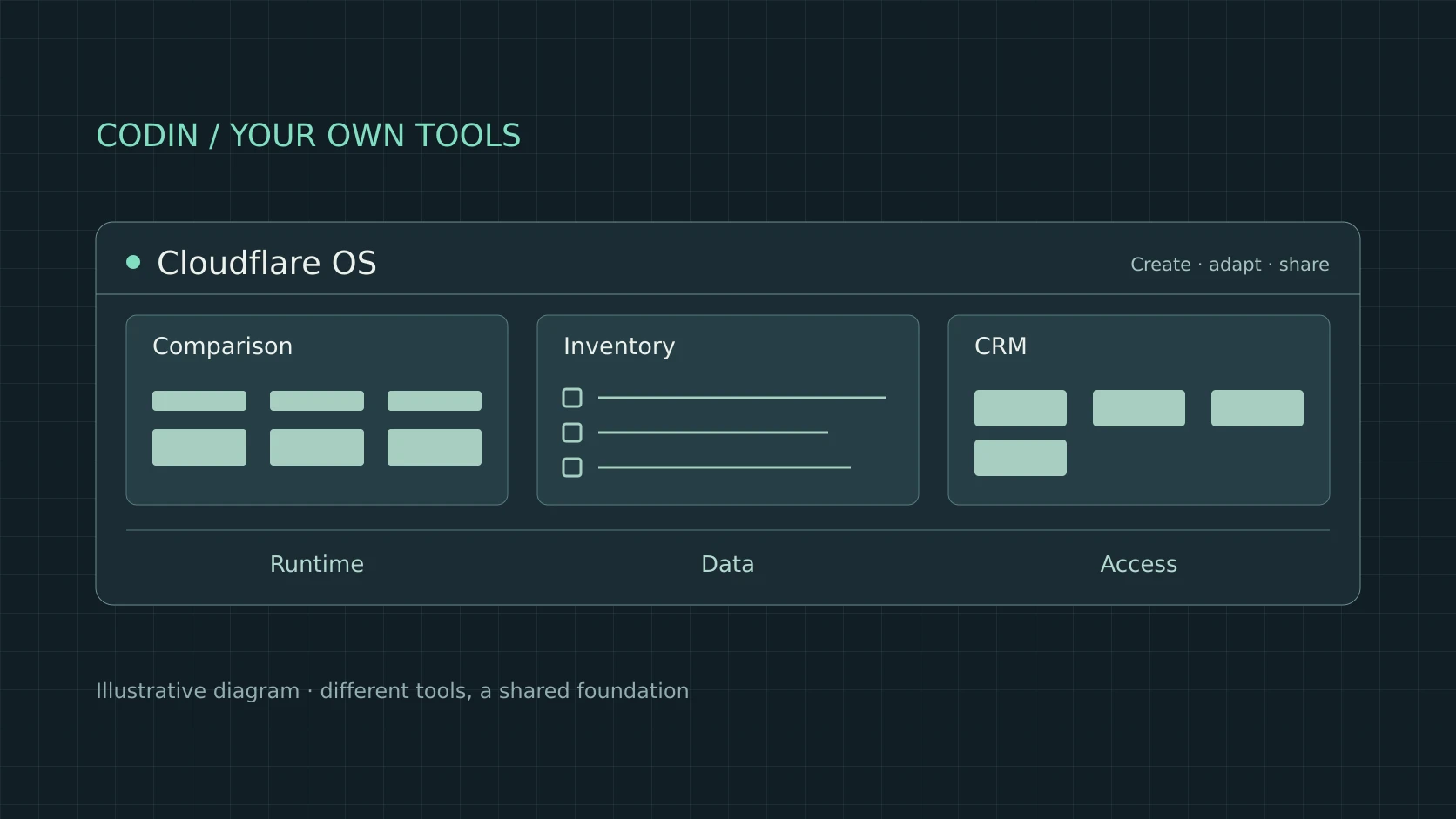
A concrete example helps explain the impact. Garry’s Redemption proposes using Garry’s Mod movement and tools inside the world of Red Dead Redemption 2. Its author credits Claude Opus 5.5 with writing, debugging and testing the code, under human direction.
According to its documentation, it keeps both games running and communicates events between them. Garry’s Mod supplies player control and tools; Red Dead Redemption 2 supplies the world and its inhabitants. The author describes it as a beta tested on one computer. That supports calling it a documented experiment, without assuming it is already a polished experience for every player.
Weapons and toolsA bridge between themExchanges positions
and actionsRed Dead Redemption 2Environments, characters
and world rendering
For someone who has spent years learning how a game engine works, seeing an experiment like this can change how they perceive their own ability. What once seemed reserved for a few people starts to look accessible with a model’s help. Each demo still leaves much to verify, but the unease need not wait until everything works perfectly.
Two questions become entangled. One is how much work can be automated. The other is why we wanted to do that work. The first can change very quickly without the second having a single answer.
Chess lost human supremacy and kept growing
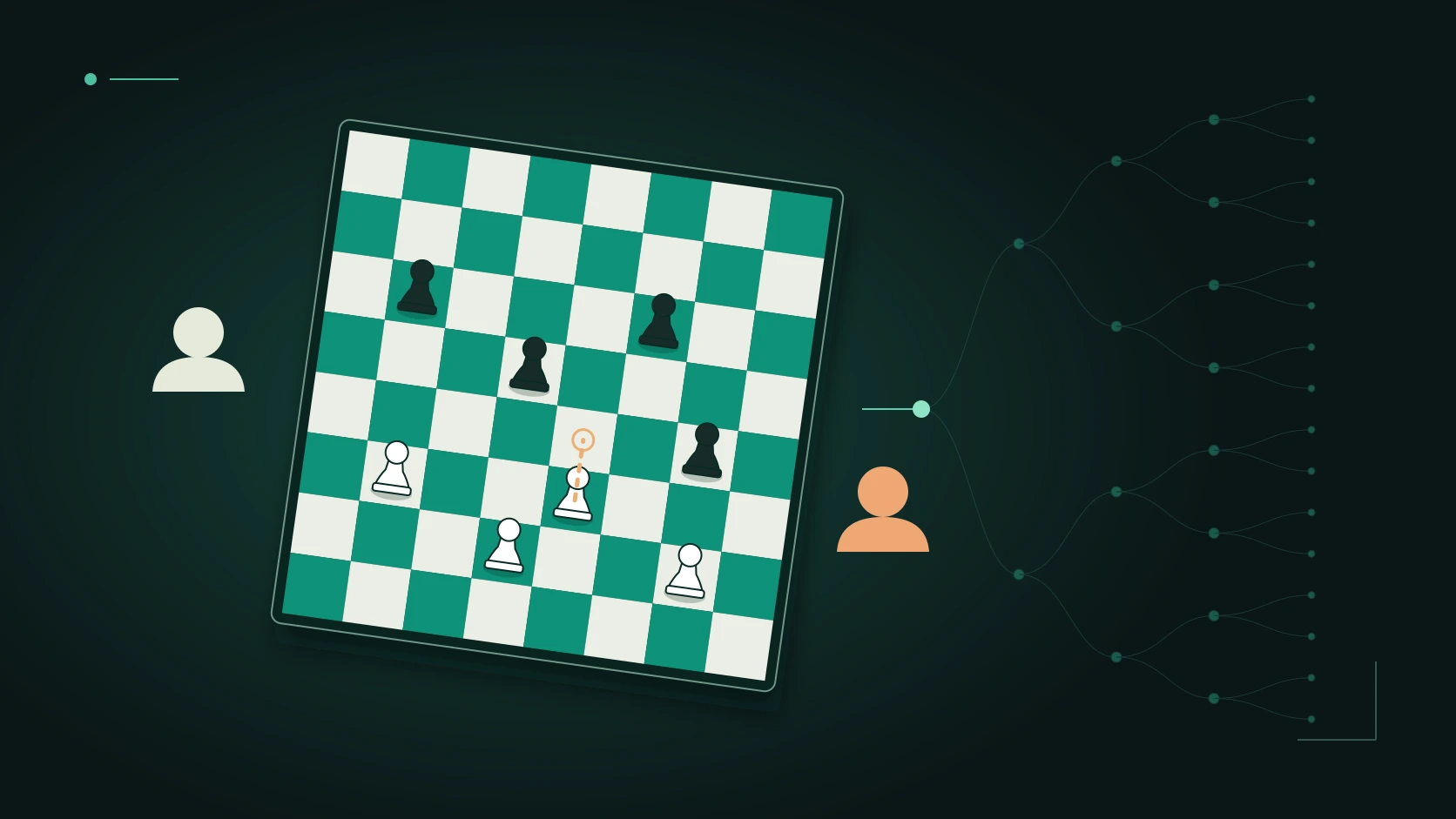
In May 1997, Deep Blue beat Garry Kasparov in a six-game match, 3.5–2.5. It was the first computer victory over the reigning world champion in a match under tournament conditions. That result did not suddenly make every program unbeatable, but it made the direction of change visible.
Today, the best chess engines far outperform the best human players. Tools such as Stockfish are also freely available and power analysis on platforms used by millions of people. You do not need an IBM supercomputer to receive an evaluation an amateur could never produce alone.
If chess depended for its appeal on humans being the best entities capable of playing, it should have gradually lost its purpose. Yet Chess.com went from the milestone of 100 million registered accounts in 2022 to 200 million in 2025. In its 2025 review, the platform reported more than six billion games.
Precision matters: these figures do not establish that more people play chess today than at any previous point in history. Nor do they establish that engines caused the growth. They do show enough for our argument: enormous expansion on a chess platform is compatible with machine superiority.
The explanation is familiar from any game between friends. Someone who finds a combination after ten minutes of thought does not stop enjoying it because a program could have spotted it instantly. The opponent, effort, surprise and understanding gained all matter. The move has value within that experience.
This was already true before AI. Almost no amateur was ever going to surpass Kasparov. His existence did not make Sunday’s game absurd. There was room to improve without aspiring to become the best intelligence on the planet.
Losing something that made us special hurts
The comparison with a grandmaster has a limit. An exceptional person is rare; a program can be available to everyone. Knowing how to do something difficult lets us help others, occupy a place in a group and receive recognition. If that ability becomes abundant, that place can change even when our enjoyment of the activity remains intact.
Imagine a modder whose community turned to them because they knew how to fix a particular kind of bug. They enjoyed investigating it, but also enjoyed being the person who could solve it. If tomorrow anyone can get the fix from an assistant, the modder still knows the same things and may have a better tool. Yet part of what they received in return has disappeared. Telling them to celebrate higher productivity overlooks a real loss.
That helps explain discouragement without turning it into proof that the activity has lost all value. A skill can stop being exceptional and remain interesting. It can lose its price and retain its usefulness. It can become less necessary for obtaining a product and remain a way to develop judgement or connect with other people.
Others will join precisely because a barrier has fallen. Consider someone who wants to create a small mission to play with friends. They care about the setting and the decisions players will make, but get stuck on the game files. If an assistant handles that part, a creative possibility opens up. For someone else, investigating those files was the fun. Neither has to want to automate the same things.
These are hypothetical examples, not a forecast of how many modders will join or leave. They show why one tool can discourage one person and excite another without either pretending.
The claim we think is mistaken is the next leap: from “part of what motivated me has changed” to “there is no point doing it anymore.”
A finished image and an understood proof
Drawing allows the same distinction. If someone needs an image for a presentation, obtaining it in seconds may solve their problem. If someone sits down to draw because they want to learn to observe a face, a generated image does not do that learning for them. Even if they prefer the result to their own drawing, they have not practised looking.
For an illustrator who earns a living from commissions, something else is at stake: whether anyone will still pay for the work. The possibility of continuing to draw for pleasure does not answer a loss of income. Chess helps us discuss the meaning of a practice; it is an inadequate answer to someone asking how they will make a living.
Mathematics adds another difficulty. Timothy Gowers explained on September 17 that a major motivation for becoming a mathematician had been solving open problems, the more famous the better. He is unsure he would have taken that path without that ambition. His concern is that young people who would have researched and passed on the mathematical tradition may no longer do so.
We discussed this in our article about AI companies’ responsibility towards the mathematical community. A new result, the understanding it enables and the education of the person studying it are related but different things.
Here the chess analogy needs adjusting. Every game starts again; an open problem, once solved, ceases to be open. If being the first person to prove it was your motivation, someone else’s solution does remove that opportunity. Asking you to repeat the proof and feel the same is not enough.
But concluding that understanding it has no value would also be unreasonable. Someone who independently rediscovers a known proof gains something they lacked, even if the library gains no theorem. The institutional problem arises if we recognise only arriving first as a contribution and leave no room for those who explain, connect ideas or teach others to think with them.
That change deserves concrete work. It also requires honesty: preserving interest in mathematics does not guarantee preserving every career path or every reason that previously drove people to research it.
Chess preserves the space to play
Another lesson from the board often gets left out. Chess did more than discover that people would keep playing for pleasure. Its communities maintain a distinction between using a machine for analysis and receiving its moves while competing against another person.
For example, Chess.com prohibits engines that analyse positions during games against other users. The platform can offer analysis tools while protecting games in which each player decides independently. Technical improvement and the rules of the activity serve different purposes.
Imagine a simple scene. You play a game, try to find a plan and lose. Afterwards, you consult the analysis and discover why your attack failed. The engine participates in learning. Had it chosen all your moves while you pretended to play independently, it would have changed the activity and broken the agreement with your opponent.
Modding and art have no single rulebook allowing that separation to transfer unchanged. But their spaces can make explicit what they offer: a collection of playable experiences, a workshop for learning to build them, an exhibition of creators’ processes or a place to experiment with tools. Each purpose makes different contributions worth valuing.
Kran’s complaint gains force here. If what a community rewards stops resembling what its members want to practise, reminding them they can still open the editor does not fix the problem. Being able to find carefully made work, receive useful feedback and share with interested people matters.
Chess therefore does not prove everything will work out on its own. It shows that we can keep valuing an activity after losing technical superiority, and that the rules and spaces in which we practise help sustain that value.
We do not need to beat the machine to continue
At Codin, we do not believe an activity stops being worthwhile because AI can do it better. That conclusion confuses one measure of the result with all the reasons someone chooses to participate.
Nor do we think hobbies need defending through promises that some exclusively human ability will always remain. Today it might be taste, tomorrow the choice of questions, the day after originality. If every reason to continue depends on something the model cannot yet do, each advance will force us to find a new justification.
The argument should survive even a more demanding scenario: suppose AI eventually produces better mods, images and explanations than we do. It still would not have learned on our behalf. It still would not have spent that afternoon with our friends. The existence of the result does not contain all the experiences available in making it.
That does not automatically restore income, attention or recognition. Community and platform organisers have decisions to make about what they surface and reward. Educators must be able to explain what is worth learning even when a tool can already solve it. Creators should retain the ability to choose which parts to delegate and which to practise.
A modder may use AI to remove a tedious task and spend more time designing a mission. Another may want to write everything because that is the challenge they enjoy. They may also decide to stop. What does not follow from a spectacular video is that continuing has become absurd.
Next time a machine does in seconds something that took us years to learn, there will be losses and opportunities to examine. But before declaring the activity over, it is worth asking what we found in it.
Chess offers a concrete answer. We know the machine would find a better move. Even so, we want to see which move we can find ourselves.
Sources
- Discount modder: X post, September 30, 2026. Individual account of possibly leaving modding.
- Kran: X post and discussion, October 2, 2026. Criticism of viral mashups from a modder who uses AI.
- Garry’s Redemption: author’s repository and documentation. Model attribution, architecture and stated beta limitations; accessed October 4, 2026.
- IBM: the history of Deep Blue. The 1996 and 1997 Kasparov matches.
- Stockfish: official project. Engine availability and use for analysis.
- Chess.com: Chess Stats. Registered-account milestones; updated September 2025.
- Chess.com: Year in Review 2025. Games recorded on the platform during 2025.
- Timothy Gowers: Why I didn’t sign the Fields medallists’ letter, September 17, 2026. Motivation, education and continuity of the mathematical community.
- Chess.com: Fair Play Policy. Updated March 25, 2026; accessed October 4.
The assessments of the meaning of creating and learning express Codin’s editorial position. The accounts quoted do not constitute a survey of the modding community.